Take office in 2008
Run a bank through the 2008 financial crisis: a souring book, thin capital, the interbank market shut, the uninsured money nervous, and rivals for sale at a discount.
Take office →It is the autumn of 2008. House prices are falling, the interbank market is shut, part of the small-business book has already soured, and the board has just appointed you with a capital ratio uncomfortably close to the requirement.
What you face
- A recession from the first month. Credit losses rise through the stages; loan demand dries up.
- Thin capital. CET1 close to the requirement, and the supervisor's ladder runs call, direction, memorandum, warnings.
- Frozen funding. The unsecured market is shut. Covered bonds and the central bank's facility still work; the facility carries a stigma and a drip.
- The uninsured money. Corporate balances above the insured cap run first. In the United States the cap rises to 250,000 that October.
- Rivals for sale. The banks that did not keep a buffer go at a discount, and the supervisor's change-of-control decision takes two months.
How the survivors do it
- Capital first. Cut the dividend, tighten the products' grade floors, raise equity by rights issue if the market will underwrite it.
- Liquidity before the rumour. Bills and short paper. Survival months on LIQ, not the ratio.
- Provision honestly. The recoveries desk: tender the cold files, forbear the ones that can pay, never the collector.
- Buy with dry powder. A sound bank in 2009 buys its rival for a fraction of book, and the goodwill is deducted from CET1.
What really happened
The mechanics are the real ones. Read why banks fail, how bank runs happen and how the rules changed after 2008.
Frequently asked questions
Can I run a bank through the 2008 crisis?
Yes. Take office in 2008 in any of the six jurisdictions. The policy rate, the curve, growth, unemployment and house prices follow the real series; the banks are fictional.
Is it realistic?
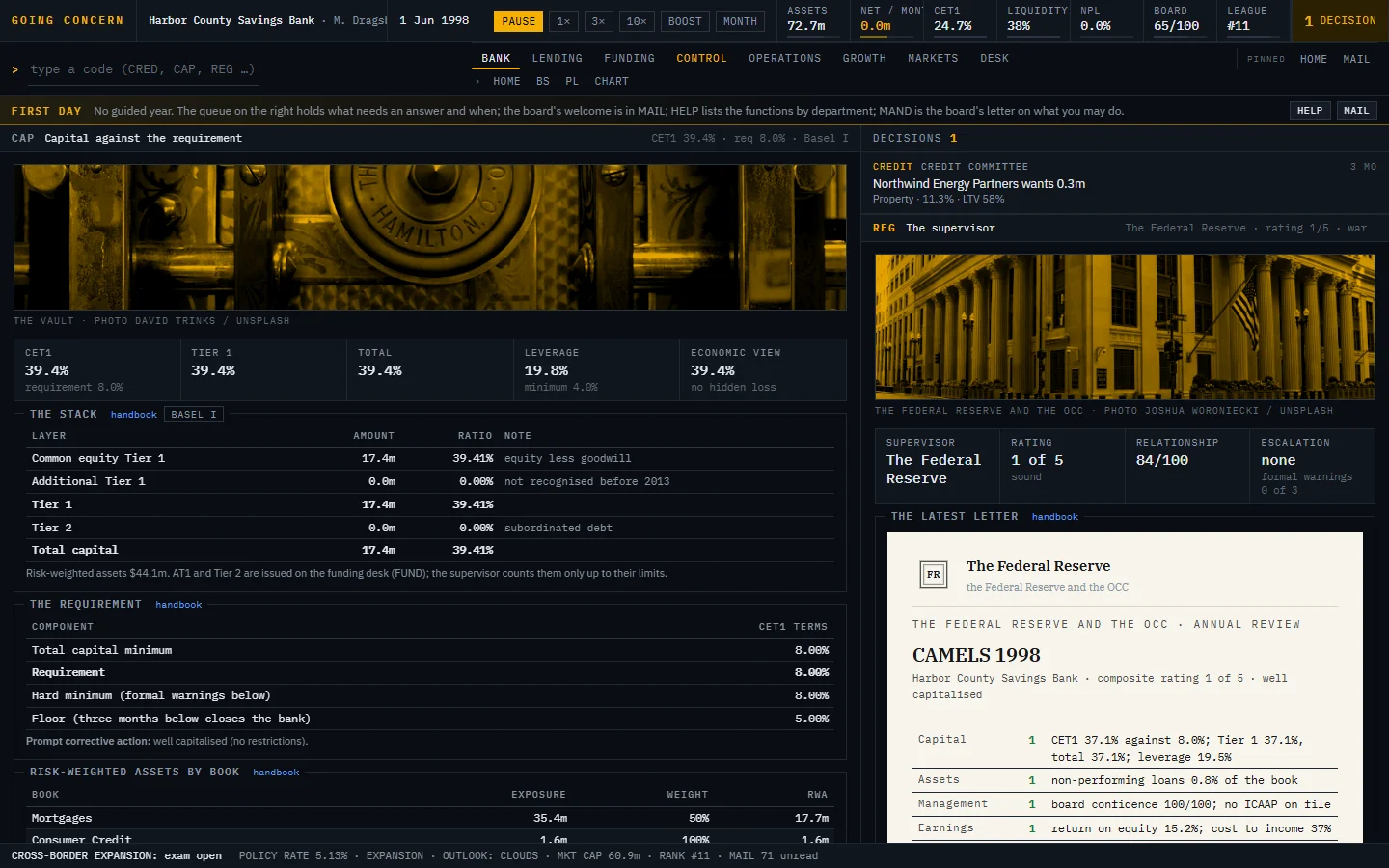
The forces are the real ones: falling collateral, rising defaults, a shut interbank market, the uninsured money leaving, and the supervisor’s ladder. The engine enforces the accounting identity every month.
Run a bank. Stay one.
A bank in a real jurisdiction in a real year, run from a terminal: the funding stack, the capital stack, the credit desk, the agencies, the supervisor and the board. Free, in the browser.